

Importance of Gamification in Education
Recently, keeping students engaged has been among the struggles students face due to recent distractions that can disturb their learning process. There are ways students can stay connected while learning, and one of the most effective methods is Gamification.
In this article, the concept of gamification in education, examples, and the importance of gamification in education will be explicitly discussed.
What is Gamification?
Gamification is the process of using game design elements and principles in non-game contexts to improve user engagement. Gamification has been used in different sectors through features such as points, badges, leaderboards, and many more. It is often utilized to boost user engagement within a system, and most times, it is a component of a design system.
Usually, people get bored when they start working or learning and need something to keep them engaged. With gamification, engagement comes more easily. This is why, in a sector like education, gamification makes it easier to improve student engagement, learning, and knowledge retention.
Gamification in Education
Gamification in Education simply means increasing student engagement by including game-like elements in the learning process. There are educational software systems such as Khan Academy and uLesson that include game-like elements in their platforms to help students engage better and enjoy their learning experience.

Most students get tired after watching several Chemistry videos on learning websites. However, in cases where students can play a few games and the games become slightly competitive—such as giving students the chance to top leaderboards—it helps them pay more attention to their studies and remain motivated.
Examples of Gamification in Education
According to San Diego University, the main goal of gamification in education is to engage students and remind them that learning is fun and rewarding. Below are some common examples of gamification in education:
1. Points:
Points are a common example of gamification in education. When students come across this game element, it piques their interest. In cases where students earn points for completing tasks or lessons, it creates an opportunity for healthy competition and makes learning more enjoyable.
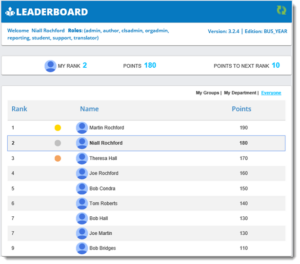
2. Leaderboards:
Leaderboards allow students to see their rankings compared to others. This competitive element encourages participation, consistency, and motivation among students.
3. Quizzes in Games:
Quizzes designed in a game-like format help students test their knowledge while still enjoying the learning process. It also improves knowledge retention.
4. Personalized Avatars:
Personalized avatars allow students to represent themselves digitally, making the learning experience more engaging and relatable.
5. Progress bars:
Progress bars are used to show learning progress. It helps students understand what they are studying and that there is progress in their learning experience. When a student sees software with progress bars that show that they are on top, they understand the significance of their learning experience, and the good part is that the learning experience is also gamified, and the students also have fun learning.
Importance of Gamification in Education
Gamification plays a crucial role in modern education by improving student engagement, increasing motivation, encouraging healthy competition, and making learning more interactive. When learning feels fun and rewarding, students are more likely to stay focused and retain information effectively.
Here are some of the importance of Gamification in Education:
1. Increased Engagement:
When students have access to gamified tools such as leaderboards, quizzes, and similar features, it improves engagement among students, which is beneficial for both teachers and learners. Gamification creates an interactive learning environment where students are more willing to participate actively in lessons.
In cases where a student has been struggling to understand a subject, such students can use quizzes to test themselves, identify weak areas, and improve gradually without pressure.
2. Competitive Edge:
Gamification introduces healthy competition into the learning process. Features like points, badges, and leaderboards encourage students to put in more effort to perform better academically. This competitive edge motivates students to stay consistent, complete tasks on time, and aim for better results while still maintaining a fun learning atmosphere.
3. Improved Retention:
Learning through gamification helps students retain information more effectively. When lessons are combined with interactive activities and rewards, students are more likely to remember what they have learned. The repetitive nature of quizzes and challenges reinforces knowledge and helps students understand concepts better over time.
4. Accessible Learning:
Gamified learning tools make education more accessible to students with different learning styles. Some students learn better through visual elements, others through interaction and practice. Gamification provides multiple ways for students to engage with content, making learning more inclusive and flexible.
5. Immediate Feedback:
One major advantage of gamification in education is immediate feedback. Students can instantly see their performance after completing quizzes or tasks, which helps them understand their mistakes and improve quickly. Immediate feedback also keeps students motivated and encourages continuous learning.
Conclusion
Gamification in education has proven to be an effective approach to improving student engagement and learning outcomes. By making learning interactive, competitive, and rewarding, gamification helps students stay motivated, retain knowledge, and develop a positive attitude toward education.
As educational technology continues to evolve, integrating gamification into learning systems will remain an important strategy for enhancing the overall learning experience.