

School Management Software (SMS) vs Learning Management System (LMS): What Schools Need to Know
School Management Software (SMS) and Learning Management System (LMS) are often used interchangeably, especially among administrators who assume that since both exist on a school portal, they serve the same purpose. However, these are two different systems with distinct functions in modern education.
In this article, we will clearly explain what SMS and LMS are, their key features, and their differences—providing everything schools need to know to make the right decision.
What is School Management Software (SMS)?
School Management Software (SMS) is a digital solution designed to streamline and automate the administrative, academic, and operational tasks of educational institutions. It serves as a centralized platform for managing student data, attendance, grades, schedules, communication, and more.
This software is used by administrators, lecturers, students, and even parents to simplify processes such as fee collection, report generation, timetable creation, and communication. By integrating these functions into one system, SMS improves efficiency, reduces paperwork, and enhances overall school management.
Features of School Management Software
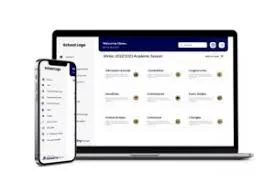
School Management Software includes several features that ensure seamless academic and administrative processes. SchoolTry, as an EdTech software, provides all of these features, including:
1. Attendance Tracking:
A good school system must be easy and accessible. Attendance tracking allows lecturers to monitor class attendance while enabling students to log their presence efficiently.
2. Grades, Results, and Transcript Management:
One of the most important aspects of academic life is access to results. A grading system allows students to view their grades, while administrators can manage transcripts and academic records seamlessly.
3. Curriculum & Course Management:
Managing multiple courses across departments can be complex. This feature allows students to register for courses and view their curriculum for each session with ease.
4. Hostel & Accommodation Management:
Securing accommodation can be a long and stressful process. With this feature, students can book hostels directly through the portal, simplifying the entire process.
5. Fees Structure & Collection:
Students can pay school fees, acceptance fees, and other charges directly on the platform, making payments seamless and stress-free.
6. Lecturer Appraisal & Academic Planning:
Students can provide feedback on lecturers anonymously, while administrators can use the data to improve teaching quality and academic planning.
What is a Learning Management System (LMS)?
A Learning Management System (LMS) is a software application or web-based technology used to plan, deliver, and assess learning. It is the platform where actual teaching and learning take place in a digital environment.

In institutions, LMS enables lecturers to deliver lectures, assess student performance, and create interactive learning experiences. Students can join virtual classes, complete assignments, and track their academic progress—all within the system.
Features of Learning Management System
A Learning Management System enhances the learning experience through several key features, including:
1. Content Management & Hosting:
The LMS serves as a centralized hub where all course materials are stored. Students can easily access lecture notes, videos, and other learning resources.
2. Assessment & Certification:
Students can take quizzes, tests, and other assessments to evaluate their understanding. Lecturers can also provide feedback and track performance.
3. Mobile Learning:
As a digital platform, LMS allows students to learn from anywhere. Whether on campus or remotely, learning continues without interruption.
4. Collaborative Learning:
Students can engage in discussions, group work, and interactive sessions, making learning more engaging and participatory.
Differences Between SMS and LMS
SMS and LMS are both essential for a school/institution. Although they serve different purposes in a school environment.
School Management Software (SMS) acts as the administrative backbone of an institution. It handles operations such as grading, attendance, fee management, and overall academic administration.
On the other hand, a Learning Management System (LMS) serves as the learning hub. It focuses on delivering lectures, managing course content, and tracking student learning progress.
In simple terms, the School Management Software manages the school and the Learning Management System ensures a seamless process in learning.
How SchoolTry Combines SMS and LMS
SchoolTry combines both SMS and LMS into one seamless platform for its partners. We ensure that schools have a strong administrative system while also providing a powerful learning platform for students and lecturers.
Our goal is to create a complete digital ecosystem where administration and learning work hand-in-hand. From managing academic records to delivering virtual classes, SchoolTry ensures efficiency at every level.
Recently, University of Ilorin, one of our partners, started using the LMS platform to enhance virtual learning for students. This milestone reflects our commitment to delivering seamless and effective digital education solutions.

Conclusion
School Management Software (SMS) and Learning Management System (LMS) are both essential for modern educational institutions. SMS handles administrative processes like grading and course management while LMS ensures that learning is interactive, accessible, and engaging.
For schools aiming for efficiency and excellence, using both systems is no longer optional; it is a necessity.
Choosing a platform like SchoolTry that combines both SMS and LMS ensures that institutions can manage their operations effectively while delivering high-quality learning experiences. Register for free here to experience a seamless learning process.