

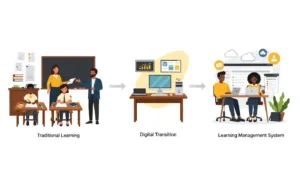
What is an LMS? There was a time, not too long ago, when learning happened strictly within four classroom walls. We relied on chalkboards, heavy textbooks, and handwritten notes. If you weren’t physically in your seat, you were essentially “out of the loop.” Education was fixed to a specific time and a specific place.
Over the years, the landscape began to shift. Computers moved from the “lab” into the classroom, the internet opened up a world of information, and digital tools slowly started to change how we share knowledge.
Today, learning is no longer limited by where you are or what time it is. You can attend a class from your living room, submit an essay at midnight, and learn at a speed that works for you. But this new freedom brought a challenge: how do schools keep all this digital content organized? How do they track progress and keep students engaged without losing that “human” touch?
This need led to the Learning Management System (LMS). It is a technology designed to make the learning experience smoother and more organized for teachers, students, and parents alike. In this article, we’ll dive into what an LMS actually is, why it matters, how it works, and how platforms like SchoolTry are helping to shape the schools of tomorrow. Let’s dive in.
What Is an LMS (Learning Management System)?
At its core, a Learning Management System (LMS) is a digital platform used to create, manage, and deliver educational content. Think of it as a “virtual campus” that lives on your computer or phone. It’s a central hub where teachers can upload lessons, students can take tests, and everyone can stay in sync.
LMS platforms aren’t just for primary schools; they are used almost everywhere:
1. Schools and Universities:
Institutions utilise these platforms to bridge the gap between physical and digital learning. Consequently, they can manage everything from daily homework assignments to full-scale online degrees, ensuring that no student is left behind regardless of their physical location.
2. Training Centres:
Specialised hubs often use an LMS to host certification courses. By doing so, they provide a structured pathway for professionals to acquire new skills and earn credentials through interactive modules and timed assessments.
3. Businesses and Organisations:
Companies leverage an LMS to onboard new hires and keep current employees sharp. This allows them to deliver consistent training on company policies or new software across global offices without the need for expensive travel.
By bringing everything into one system, an LMS effectively takes the “mess” out of teaching and learning, turning a scattered collection of files into a cohesive educational journey.

Why Is an LMS Important?
An LMS does more than just save paper; it fundamentally changes the way we experience education. Here are several reasons why it has become so essential in the modern era:
1. Centralisation of Resources:
By hosting all materials in one place, the system eliminates the frustration of lost assignments or buried emails. Instead, students and teachers benefit from a unified library where every course, video, and PDF is stored securely and is easy to find.
2. Unrestricted Accessibility:
Since the platform lives in the cloud, learning is no longer tethered to a desk. Whether a student is commuting on a bus or relaxing at home, they can access their entire classroom through any mobile device or laptop, ensuring that learning continues 24/7.
3. Dynamic Student Engagement:
Let’s face it—watching an engaging video or participating in a gamified quiz is often far more stimulating than reading a dry, static textbook. The LMS encourages active participation through discussion boards and interactive media, which helps information stick.
4. Sophisticated Real-Time Tracking:
Furthermore, these systems empower teachers with “superpowers” to monitor progress. They can instantly see which students are excelling and who might be struggling with a specific concept. As a result, educators can provide personalized support right when it is needed most.
5. Limitless Scalability:
Finally, an LMS allows an institution to grow without the typical growing pains. A school can expand from 100 students to 1,000 almost overnight because the administrative workload, like grading and enrolment is largely automated by the system.
How Does an LMS Work?
An LMS works by breaking down the complex learning process into simple, digital steps that ensure everyone stays on the same page:
1. Creating the Content:
To begin, educators build their digital curriculum by uploading lessons, recorded lectures, and reading materials. They can organize these into logical “modules” that guide the student from point A to point B.
2. Enrolling the Users:
Once the “house” is built, students and instructors are added to the system. They are then assigned to specific classes based on their grade level or department, ensuring they only see the content that is relevant to them.
3. Delivering the Lessons:
After the course goes live, students log in to their personal dashboards. Here, they can see upcoming deadlines, watch new videos, and interact with the lesson materials at their own pace.
4. Taking Assessments:
As the student progresses, the system facilitates quizzes and assignments. Many platforms even grade multiple-choice tests automatically, providing instant feedback to the student and saving the teacher hours of manual work.
5. Reporting and Analytics:
Throughout the entire process, the LMS silently collects data. It generates detailed reports on attendance, test scores, and participation, giving administrators a clear, data-driven picture of the school’s overall health.
Key Features to Look For
If you’re looking for a great LMS, it needs to have a few “must-have” features to ensure long-term success:
1. Intuitive and Simple Dashboards:
First and foremost, the interface must be easy to navigate. If a student or teacher has to struggle just to find their homework, they will quickly lose motivation. A clean design is non-negotiable.
2. Mobile-First Design:
Since we live in an age where smartphones are the primary tool for communication, the LMS must work perfectly on small screens. A dedicated mobile app or a responsive web design ensures that learning happens anywhere.
3. Robust Security and Privacy:
Because the system handles sensitive student records, high-level encryption and secure logins are vital. Protecting the privacy of minors and institutional data is the most important responsibility of the platform.
4. Seamless Third-Party Integrations:
Finally, a powerful LMS should “play well with others.” It needs to connect easily with tools people already use, such as Zoom for live classes, Google Drive for storage, or Microsoft Teams for collaboration.
How to Choose the Right LMS
Choosing an LMS is a major commitment that will affect your institution for years. Therefore, you shouldn’t just pick the flashiest option. Instead, carefully consider the following:
1. The Learning Curve:
Evaluate how much training your staff will need. A system that is powerful but impossible to learn will only lead to frustration and low adoption rates.
2. Future Growth and Flexibility:
Think about where your school will be in five years. You need a platform that can handle more users and more data without slowing down or requiring a complete system overhaul.
3. Reliable Customer Support:
When a technical glitch happens during an exam, you need help immediately. Make sure the provider offers 24/7 support and has a reputation for being responsive and helpful.
4. Overall Value and Transparent Pricing:
Beyond the initial setup fee, look for hidden costs. Ensure the pricing model—whether it’s per student or per month—provides long-term value that fits comfortably within your budget.
A Learning Management System: SchoolTry
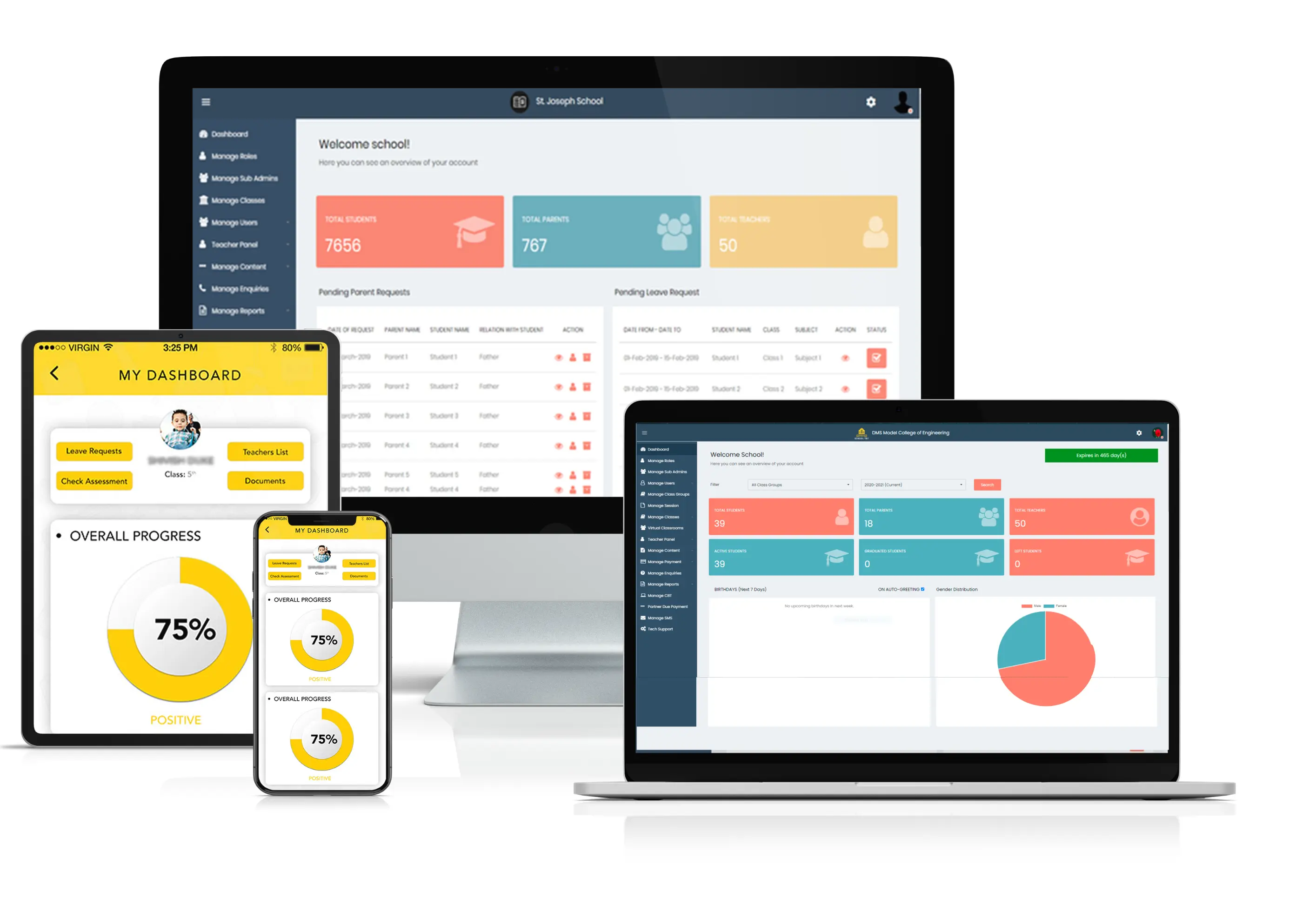
This is where platforms like SchoolTry truly shine. SchoolTry is an LMS built specifically to meet the unique challenges of modern educational environments. It is designed to be simple enough for anyone to use, yet powerful enough to manage an entire school’s ecosystem.
Instead of being a “closed box” for files, SchoolTry prioritises the connection between people. Teachers can set assignments and enter grades with just a few clicks. Students enjoy a clear, distraction-free path to their coursework.
Most importantly, it bridges the gap with parents. Through a dedicated mobile app, parents can stay updated on their child’s attendance, view real-time grade reports, and even handle school fee payments securely. By consolidating these features, SchoolTry transforms the LMS from a simple tool into a complete school community.
Conclusion
As our world continues to change, the way we learn must change too. A learning management system isn’t just a “nice-to-have” anymore; it’s the engine that makes modern education possible. It brings organization, accessibility, and data-driven insights to the palm of your hand.
By choosing the right platform like SchoolTry, schools can stop fighting with paperwork and start focusing on what truly matters which is helping students succeed and prepare for the future.